 Rebiki (Levi)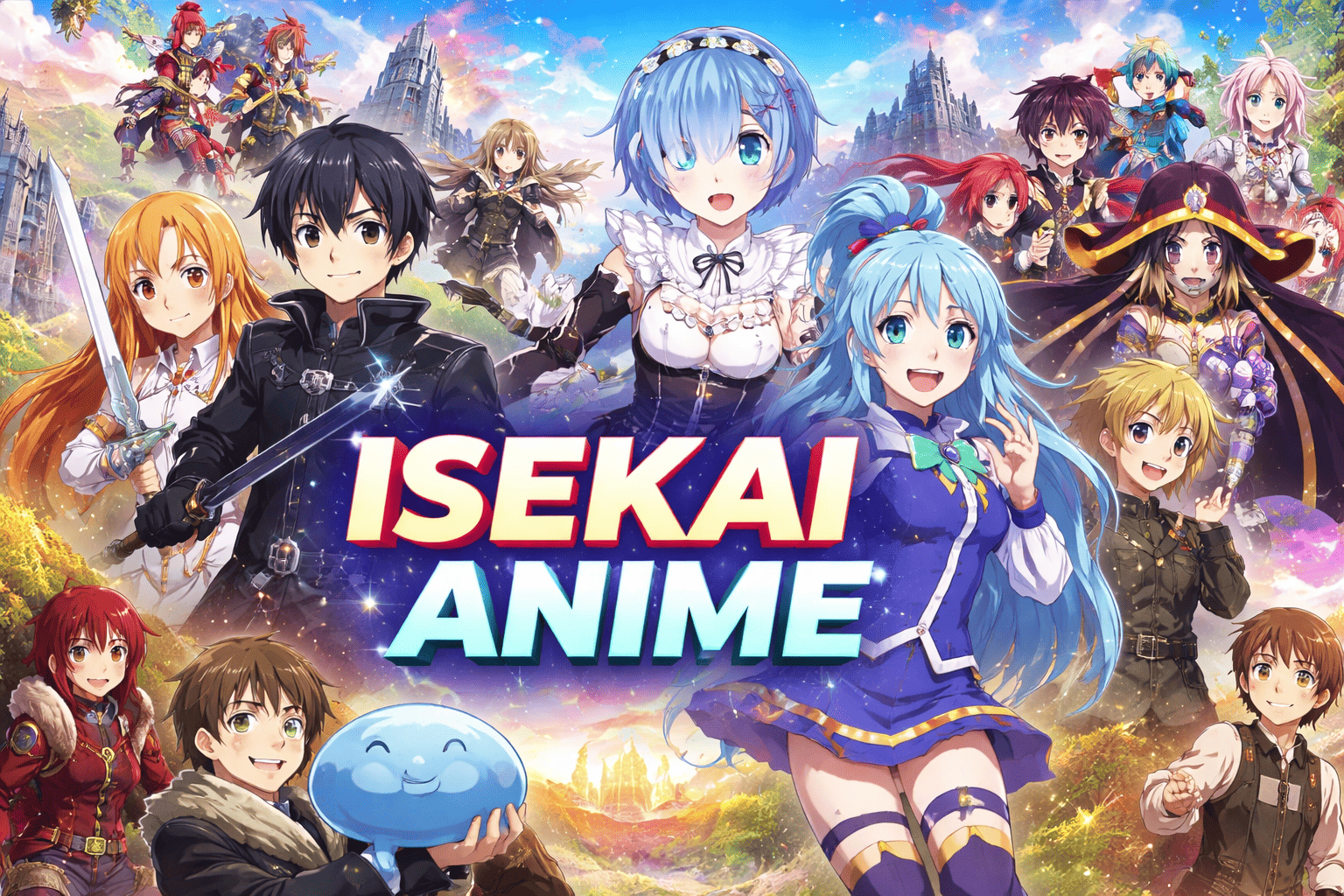
The isekai anime genre has become one of the most recognizable and dominant storytelling trends in modern anime. From overpowered protagonists to immersive fantasy worlds, isekai continues to attract new viewers and longtime fans alike. But what exactly defines it, and why has it exploded in popularity over the past decade?
Below is a deep dive into the isekai anime genre—its concept, appeal, themes, and the titles that shaped it.
What does “Isekai” mean in anime?
“Isekai” is a Japanese term that literally translates to “another world.” In anime, it refers to stories where the main character is transported, reincarnated, or trapped in a completely different world from their original one. These worlds are often fantasy-based, filled with magic, monsters, kingdoms, and game-like mechanics.
The core idea is simple: a normal person leaves their reality and must survive and adapt in a new environment with different rules. This shift in setting becomes the foundation for character growth, adventure, and conflict.
Isekai can involve:
- Reincarnation after death
- Being summoned as a hero
- Getting trapped in a video game
- Traveling through dimensions
- Reverse isekai, where fantasy characters come to Earth
This flexibility is part of what enables the genre to continue evolving.
Why is the isekai genre so popular?
Isekai thrives because it blends escapism, self-insertion fantasy, and world-building into a single narrative experience. Viewers imagine what they would do in a similar situation—new powers, a new identity, and a second chance at life.
Several factors drive its popularity:
- Relatability: Protagonists often start as ordinary people
- Wish fulfillment: Characters become powerful, respected, or important
- Exploration: New worlds feel limitless and immersive
- Emotional reset: Many stories revolve around redemption or starting over
For many fans, isekai answers a simple question: “What if I could live a completely different life?”
How did Isekai become a dominant anime genre?
While “another world” stories existed long before modern anime, the genre experienced a surge in popularity during the 2010s. Light novels and web novels played a major role in this boom, especially on platforms where authors published fantasy reincarnation stories.
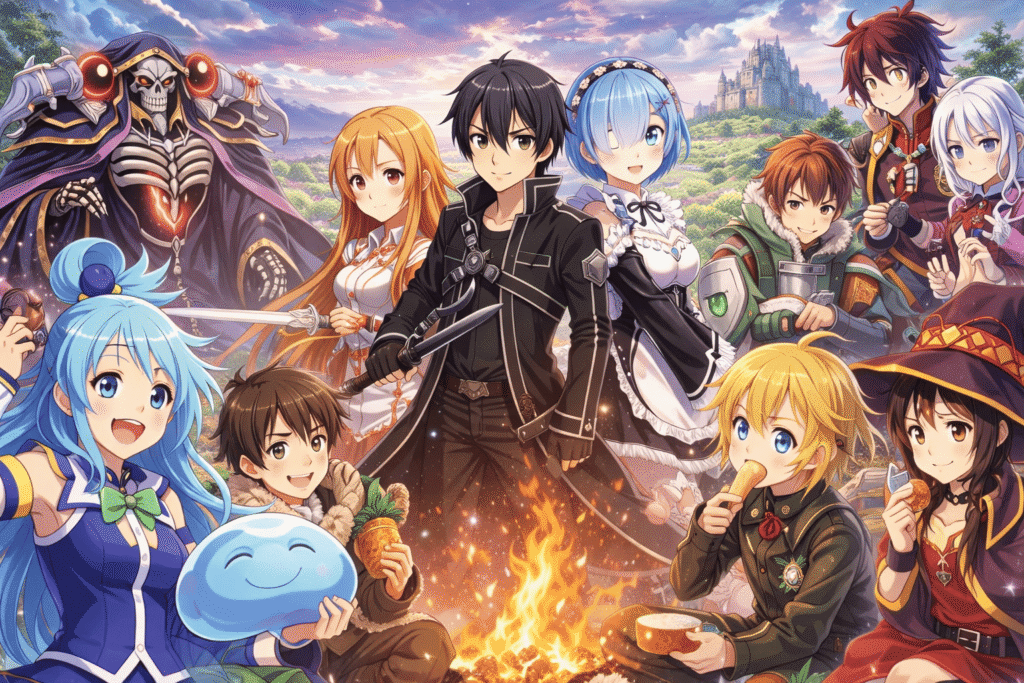
Several breakthrough series pushed isekai into mainstream success:
- Sword Art Online popularized the “trapped in a game world” concept
- Re:Zero introduced psychological depth and darker storytelling
- Konosuba offered comedic parody
- Mushoku Tensei helped define modern reincarnation tropes
Since then, studios have produced dozens of isekai adaptations every year, making it one of anime’s most crowded genres.
What are the core themes found in isekai anime?
Even with different settings and tones, most isekai share similar narrative foundations.
- Second chances: Many protagonists come from difficult lives and find purpose in a new world.
- Identity and transformation: Characters reinvent themselves, often becoming stronger or more confident.
- Survival and adaptation: Learning the rules of a new world becomes a key part of the story.
- Power fantasy: Abilities, magic systems, and leveling mechanics are common.
- Social rebuilding: Some series focus on building kingdoms, communities, or alliances.
These themes make isekai feel both personal and epic at the same time.
Are all isekai anime fantasy-based?
Yes, but not all. While fantasy settings dominate, isekai can explore science fiction, alternate histories, or even realistic environments.
Examples include:
- Game worlds with RPG mechanics
- Alternate versions of Earth
- Historical timelines
- Futuristic universes
The “another world” concept is flexible enough to fit nearly any genre.
What are the main types of isekai stories?
The genre has evolved into several recognizable subtypes.
- Reincarnation isekai: The protagonist dies and is reborn in a new world.
- Summoned hero isekai: Characters are called into another world to save it.
- Trapped-in-game isekai: Players become stuck inside virtual reality worlds.
- Reverse isekai: Fantasy characters enter the real world.
- Villainess isekai: Characters awaken inside dating sim or otome game worlds as antagonists.
How has Isekai changed over time?
Early isekai focused on adventure and exploration. Modern entries often mix:
- comedy
- darker psychological themes
- political storytelling
- slice-of-life elements
Some recent series even parody the genre itself, showing self-awareness of its tropes.
The shift shows how isekai is no longer just a trend—it’s a storytelling framework.
What makes a great isekai anime stand out?
With so many titles released each year, standout series usually excel in one or more areas:
- strong world-building
- unique magic or power systems
- character-driven storytelling
- emotional stakes
- creative twists on the genre
The best isekai aren’t just about being transported—they’re about meaningful change.
Top isekai anime you should know
Here are some of the most popular and influential isekai anime that shaped the genre:
- Sword Art Online: A groundbreaking series about players trapped in a deadly VR MMORPG.
- Re:Zero − Starting Life in Another World: A psychological take on isekai where the protagonist relives time after dying.
- That Time I Got Reincarnated as a Slime: Focuses on world-building and leadership in a fantasy setting.
- Mushoku Tensei: Jobless Reincarnation: A character-driven story about redemption and personal growth.
- KonoSuba – God’s Blessing on This Wonderful World!: A comedic parody of traditional isekai tropes.
- Overlord: Centers on an overpowered ruler navigating a new world strategically.
- No Game No Life: A visually striking story about a world governed by games.
- The Rising of the Shield Hero: Combines revenge, survival, and heroism.
- Saga of Tanya the Evil: A darker military-themed isekai set in an alternate war timeline.
- Log Horizon: Focuses on politics, strategy, and community-building inside a game world.
- The Devil Is a Part-Timer: A reverse isekai blending fantasy and real-world comedy.
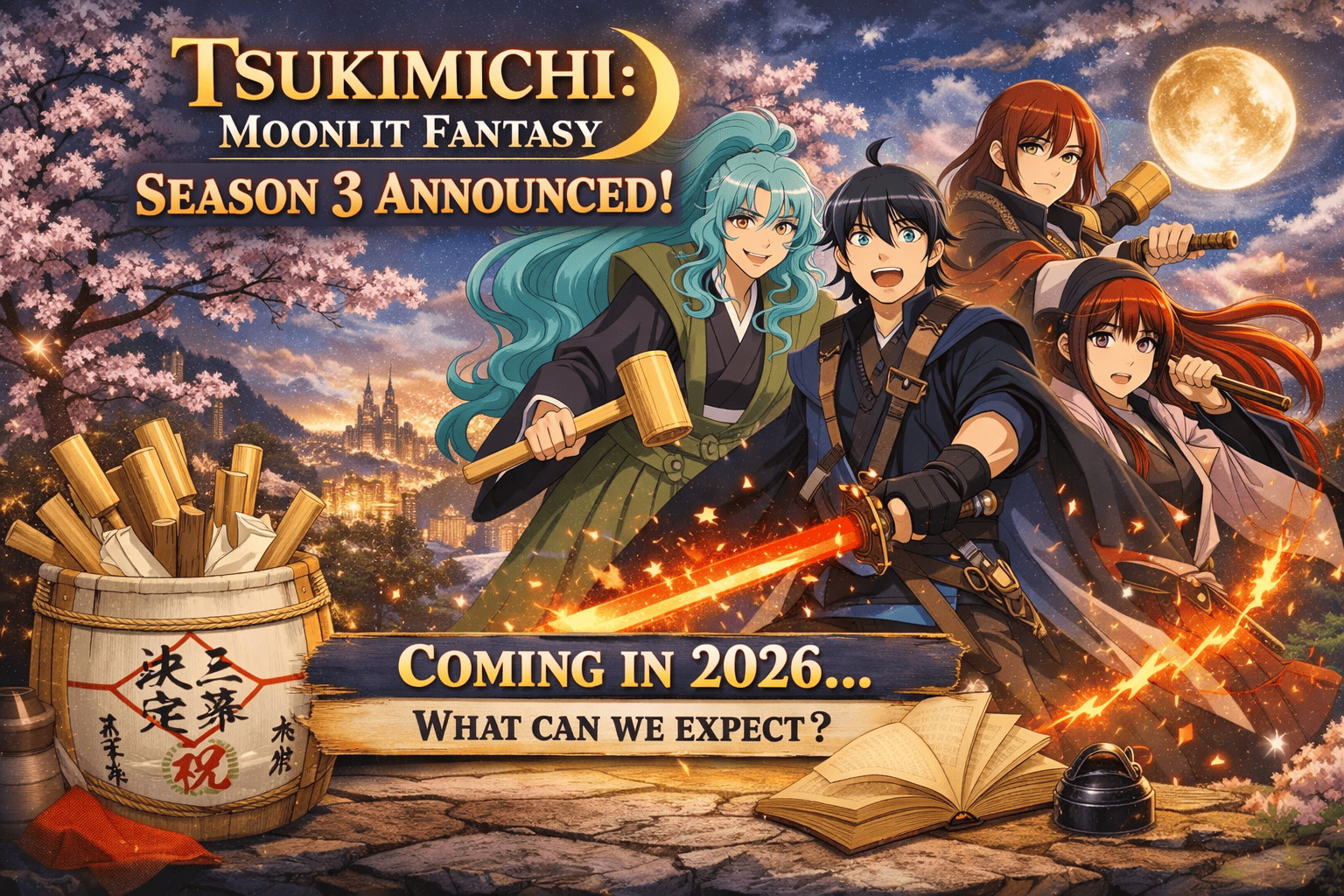
- Tsukimichi: Moonlit Fantasy: A modern take on the summoned-hero formula with unconventional twists.
Is isekai overused or still evolving?
The genre is often criticized for repetition, but it continues to evolve. New entries experiment with:
- unconventional protagonists
- anti-hero perspectives
- slower slice-of-life storytelling
- philosophical themes
Rather than fading, isekai has become a storytelling platform for different ideas.
Why do fans keep returning to isekai stories?
At its core, isekai taps into universal human curiosity:
- What if I could start over?
- What if my life had a different path?
- What if I had powers or influence?
These emotional questions keep the genre relevant.
Isekai also provides comfort. Familiar structures, character growth, and fantasy exploration create a sense of stability for viewers.
Quick answers about the Isekai genre
Is isekai always about fantasy worlds?
Yes and No, fantasy dominates, but sci-fi and alternate realities exist too.
Is every isekai protagonist overpowered?
No, some struggle heavily and grow slowly.
Is reincarnation required for isekai?
No, transportation or summoning works too.
Is Sword Art Online considered isekai?
Yes, it fits the trapped-in-another-world structure.
Is reverse isekai still part of the genre?
Yes, the direction of travel doesn’t change the concept.
Is isekai mainly targeted at young audiences?
No, many series explore mature themes and psychological depth.
Is the genre still growing today?
Yes, new adaptations release every season.
Is isekai limited to anime?
No, it exists in manga, novels, games, and even Western media.
Is every isekai story action-focused?
No, some prioritize slice-of-life and character relationships.
Is isekai just a trend?
No, it has become a long-term storytelling category.
Final thoughts: Why isekai remains a defining anime genre?
Isekai anime continues to thrive because it combines imagination with emotional storytelling. It allows viewers to step into unfamiliar worlds while exploring familiar feelings—regret, ambition, loneliness, and hope.
Whether it’s an overpowered hero conquering a kingdom or an ordinary person trying to survive in a magical land, the genre reflects a simple but powerful idea: change is possible when your world changes.
And that idea will always resonate.
As anime keeps evolving, isekai will likely remain one of its most flexible and creative genres—adapting, reinventing, and transporting audiences into new worlds again and again.