 Rebiki (Levi)
In a recent interview, Tomohiko Ito — known for directing Sword Art Online — shared his views on the global rise of Japanese anime. He discussed how the medium’s expanding popularity could position it to compete with Hollywood’s dominance.
The Growth of Anime on the World Stage
In the last several years, anime has seen exceptional success internationally. Films such as Demon Slayer: Infinity Castle and Chainsaw Man: Reze Arc have drawn large global audiences, helping Japanese animation reach mainstream visibility beyond its traditional fanbase.
Is this growth a sign that anime could replace Hollywood’s influence?
Yes, but Ito suggests that disruptions in Hollywood — including strikes and pandemic effects — may have reduced the global pull of U.S. films, allowing anime to fill some of that cultural space.
A Word of Caution on Global Tailoring
While anime’s popularity abroad is clear, Ito warns against trying too hard to make works “globally appealing.” According to him:
- Artistic choices made to appeal to overseas viewers don’t always succeed.
- What Japanese creators think will resonate globally might not match what international audiences actually prefer.
- Cultural standards vary — what’s acceptable or fun in Japan may be judged differently elsewhere, especially in places with strong emphasis on political correctness.
Does creating specifically for global audiences guarantee success?
No, over-tailoring can dilute what makes anime unique and lead to audience disconnect.
Broader Industry Perspectives
Ito’s comments reflect a larger debate within the Japanese creative world about how to balance domestic originality with international demand.
Another prominent figure, Hideaki Anno (director of Neon Genesis Evangelion), has also voiced a similar stance: Create works true to Japanese sensibilities first — if they become popular overseas, that’s a bonus, but global appeal shouldn’t drive the creative process.
Should anime creators prioritize domestic audiences over global ones?
Yes, some industry leaders argue that authenticity and cultural identity are strengths that help Japanese anime stand out, not weaknesses to be altered for the sake of global reach.
Why This Debate Matters
With governments and studios pushing for wider international reach and larger market shares abroad, creators are increasingly asked to consider global strategy when making content. This has sparked discussions like:
- Can Japanese storytelling succeed globally without changing its essence?
- What happens when creators chase international trends too aggressively?
- Is it better to make universally safe content or culturally specific work with distinct traits?
The answers are still unfolding as the industry evolves.
FAQs About Sword Art Online
How do I watch Sword Art Online in order?
Recommended watch order (release + story flow):
- Sword Art Online (Season 1 – Aincrad & Fairy Dance)
- Sword Art Online II (Season 2 – Phantom Bullet, Calibur, Mother’s Rosario)
- Sword Art Online: Ordinal Scale (Movie – important to the main timeline)
- Sword Art Online: Alicization
- Sword Art Online: Alicization – War of Underworld (Part 1 & Part 2)
Optional / Alternate timeline:
- Sword Art Online Progressive movies retell the Aincrad arc in more detail and can be watched separately or after Season 1.
Is SAO getting a Season 4?
As of now, there is no official announcement for Sword Art Online Season 4.
- The main anime storyline concluded with Alicization: War of Underworld
- The light novel arc Unital Ring is still ongoing
- A future season is possible, but nothing has been confirmed yet
Who animated Sword Art Online?
Sword Art Online is animated by A-1 Pictures, a Japanese studio under Aniplex.
They are also known for:
- Your Lie in April
- 86
- Blue Exorcist
- Solo Leveling
Is there LGBTQ representation in Sword Art Online?
Sword Art Online does not focus heavily on LGBTQ themes, but there are notable moments and characters that fans often discuss:
- Sinon (Shino Asada) explores identity and trauma in ways some viewers interpret as gender-related
- Kirito & Eugeo’s bond is often read as emotionally intimate (though officially platonic)
- Yuuki Konno is widely loved and represents strong emotional storytelling beyond romance
While SAO isn’t explicitly LGBTQ-centric, it has moments that resonate with LGBTQ audiences.
Is Sword Art Online finished in 2025?
No. Sword Art Online is not finished as of 2025.
- The light novels are still ongoing
- The Unital Ring arc has not concluded
- The anime is currently on hiatus, not canceled or ended
Who does Kirito marry?
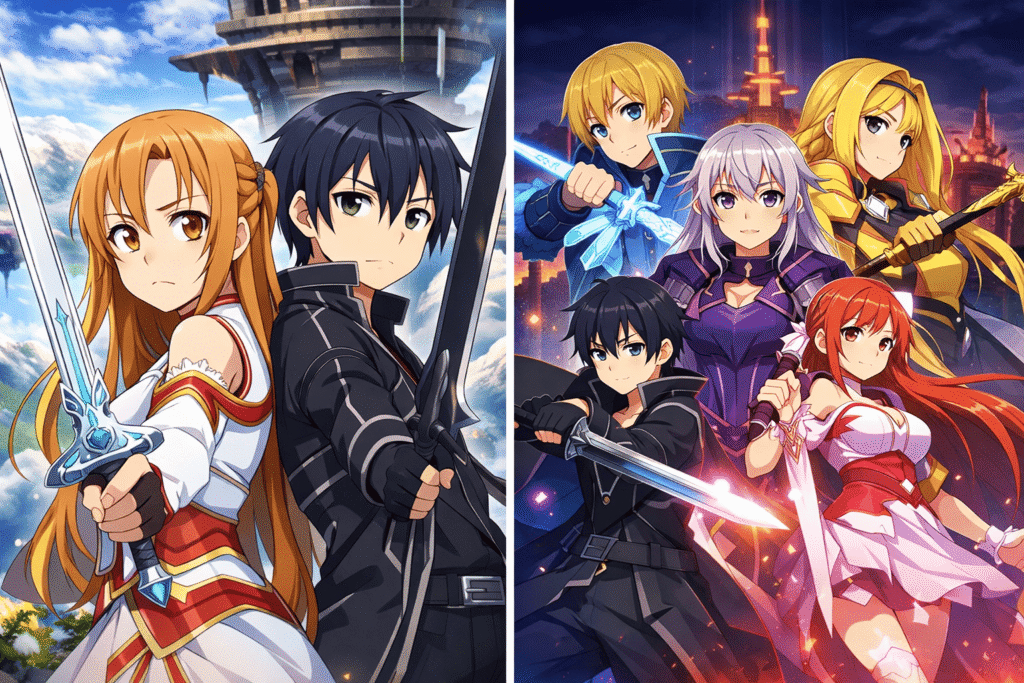
Kirito marries Asuna Yuuki.
- They are married in-game during the Aincrad arc
- They live together in a virtual cabin
- In the light novels, they are canonically engaged and remain a couple throughout the series
Asuna is Kirito’s only confirmed romantic partner in canon.